Reviewed for technical accuracy by Joe Whitehill, Technician at SPR Vent Cleaning — family-owned, 12+ years, 6,000+ homes served across Central New Jersey.
A dryer can still turn on and tumble when the vent is partly blocked. That is why a clog often develops quietly: the machine works, but it runs longer, holds more heat, and sends less moist air outdoors.
No single symptom proves the vent is the cause. A failing heating element, clogged lint screen, overloaded drum, electrical issue, gas-supply problem, or appliance sensor can produce similar complaints. The pattern of symptoms—and the airflow at the exterior termination—helps narrow the diagnosis.
1. Clothes take longer than usual to dry
This is the most common early warning. A load that used to finish in one cycle now needs two, or heavy items remain damp after lighter clothes are dry. The dryer must remove both heat and moisture. When exhaust airflow is restricted, humid air stays in the drum and drying slows.
First, clean the lint screen and confirm you are not overloading the dryer. If the change persists across normal loads, inspect the vent route rather than assuming the appliance needs replacement.
2. Clothes or the dryer feel unusually hot
Warm laundry is normal. Clothes that are too hot to handle comfortably, an unusually hot cabinet, or a laundry room that heats up during every cycle deserves attention. Restricted airflow can trap heat, but thermostat, heater, and sensor failures can also be responsible.
Do not keep repeating cycles to “see if it clears.” Stop, let the machine cool, and diagnose the cause.
3. The exterior vent flap barely opens
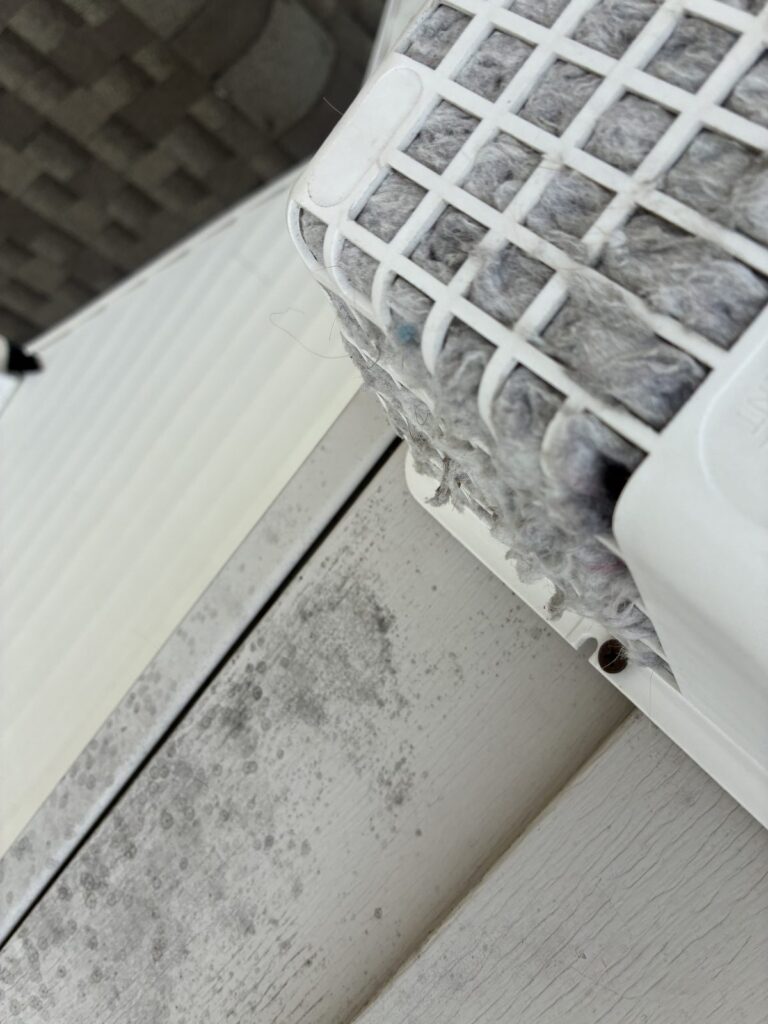
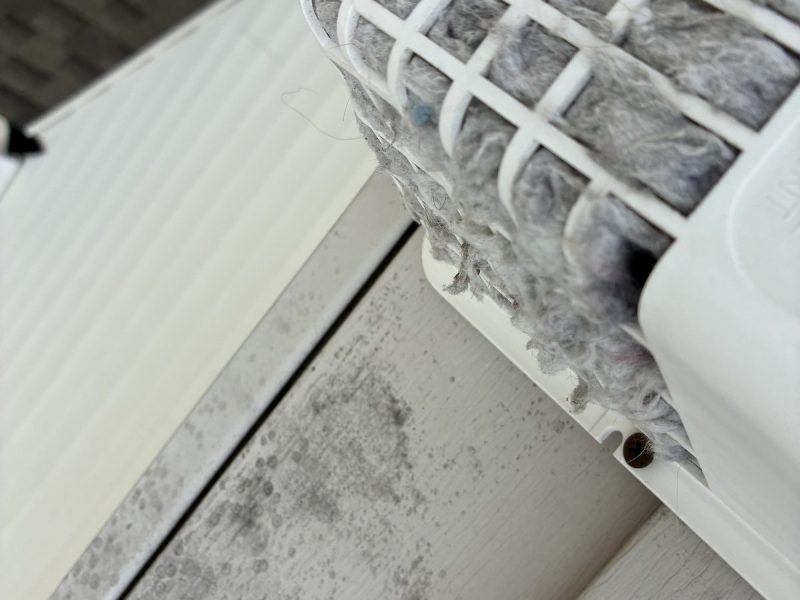
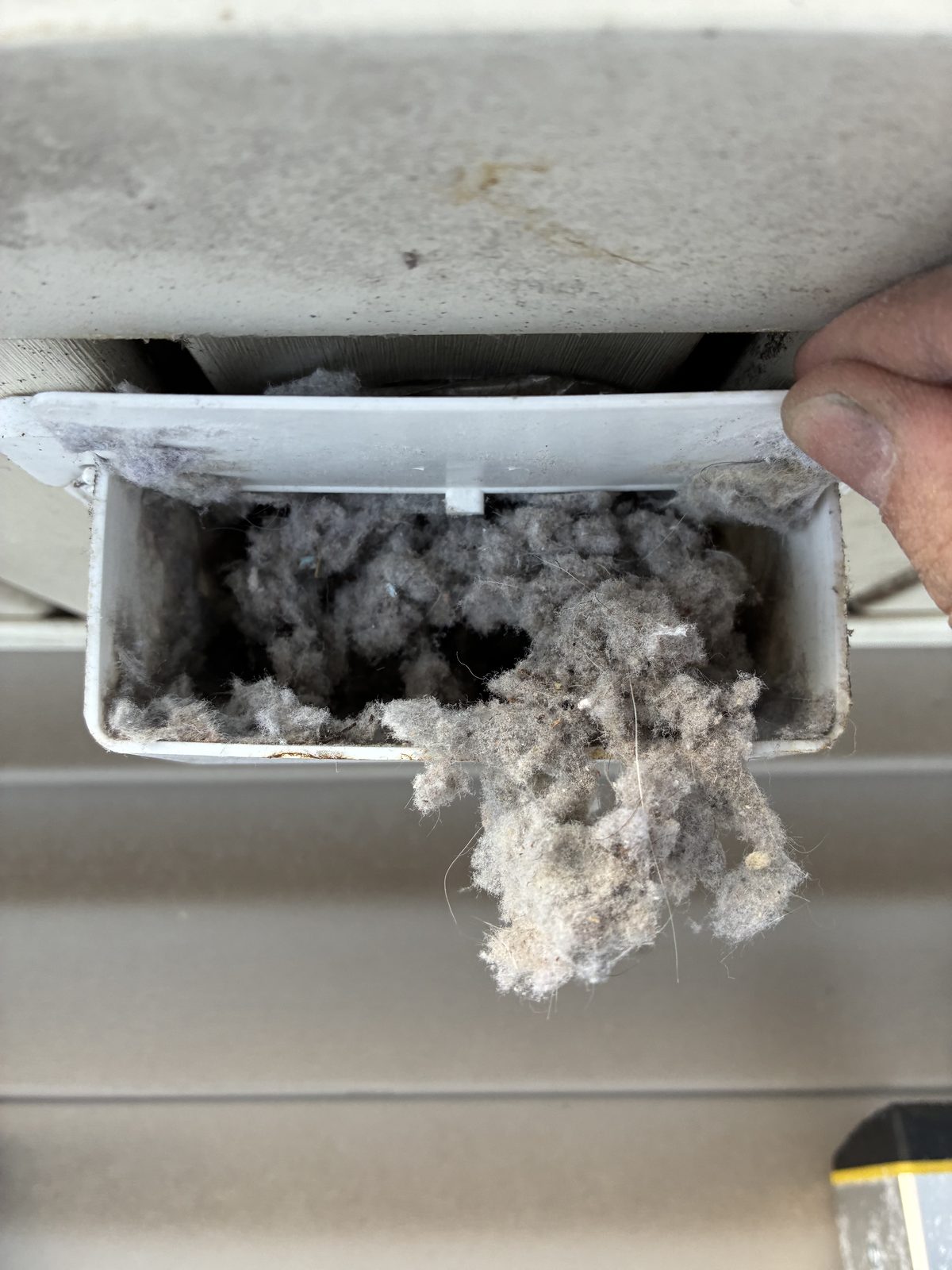
With the dryer running, the exterior damper should open and you should notice steady exhaust. A flap that barely moves, pulses weakly, or stays closed can indicate restricted airflow. Also check for lint mats, nests, snow, paint, landscaping, or a damaged cover.
A screen installed over the outlet may look like pest protection, but fine mesh can trap lint quickly. The correct termination should follow the appliance and local installation requirements while allowing lint and moisture to exit.
4. There is lint behind the dryer or around the outside hood
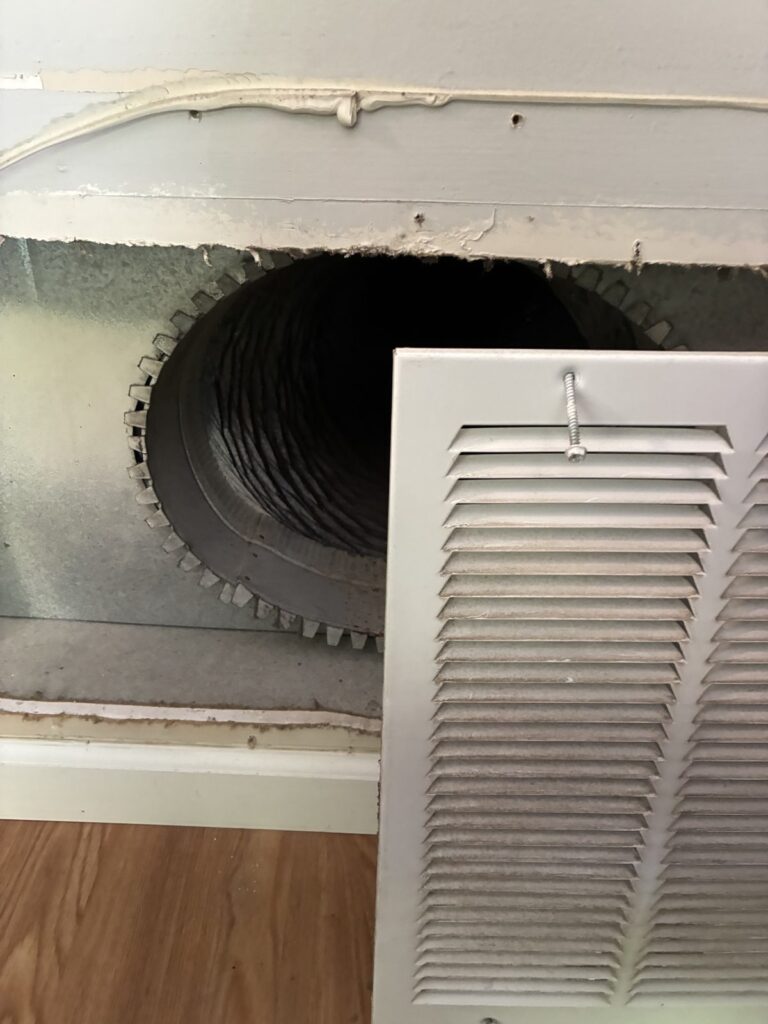
Lint in unexpected places can point to a loose connection, damaged transition, or backpressure in the duct. Look behind the machine without crushing or pulling the connection. Outdoors, repeated lint buildup around the hood may mean the system is moving debris, but it may also show that the damper or termination is catching it.
5. You notice a hot, dusty, or burning smell
A hot-lint odor is not a normal maintenance reminder. Turn the dryer off and unplug it if that can be done safely. For a gas dryer, avoid disturbing the gas connection. A burning smell can come from lint, a belt, motor, wiring, or another appliance component, so the dryer and vent may both need inspection.
If there is smoke or fire, leave the area and call 911. Do not open the machine, move it, or try to solve an active fire with a vent brush.
6. The dryer reports an airflow warning or stops early
Many modern dryers monitor temperature or airflow and display a vent-related code, warning light, or “check filter” message. Read the manufacturer’s manual because symbols differ by model. Cleaning the lint screen may clear a routine reminder; a warning that returns can indicate a downstream restriction or appliance fault.
7. It has been a long time—especially with a difficult vent route
A vent can be significantly restricted before dramatic symptoms appear. Risk increases with:
- Long runs through walls, ceilings, or attics.
- Several elbows or a roof termination.
- Frequent laundry or multiple households sharing equipment.
- Stacked appliances with limited access.
- Pets, lint-heavy fabrics, or commercial-type use.
- A crushed or excessively long flexible transition behind the dryer.
For many homes, an annual inspection and cleaning is a practical baseline. Higher-use or complex systems may need attention sooner. Read our full guide to how often a dryer vent should be cleaned.
A 5-minute homeowner airflow check
- Clean the lint screen.
- Run the dryer on the appropriate heated cycle with a normal load.
- Go to the exterior termination if it is safely reachable from the ground.
- Confirm the damper opens and look for visible blockage.
- Notice whether airflow feels steady and whether hot, humid air is escaping.
This is a screening check, not a measurement of code compliance or duct condition. Do not climb onto a roof, remove a gas appliance, reach into a running machine, or disconnect hidden ductwork.
Clog, crushed duct, or appliance problem?
| Clue | Possible explanation |
|---|---|
| Weak airflow and lint at the outlet | Lint restriction, blocked hood, crushed transition, or disconnected section |
| Good airflow but no heat | Appliance heating, electrical, gas, or control issue |
| One specific load dries slowly | Overloading, fabric type, washer spin performance, or cycle selection |
| Vent clogs again unusually fast | Route design, damaged hood, excessive bends, joint problem, or high usage |
What a technician should check
A professional visit should go beyond removing the easiest lint. Ask the technician to inspect the transition behind the dryer, clean the main run, check the exterior or roof termination, and confirm that the system is reconnected without crushing the duct. Before-and-after photos are especially useful when the route is concealed.
Cleaning and repair are different scopes. A crushed transition, detached joint, damaged cap, or unsafe route may require repair or installation by an appropriately qualified professional. For selected projects, SPR can coordinate a trusted independent service professional from its network.
Frequently asked questions
Can a clogged vent damage the dryer?
Restricted airflow can make the machine run longer and hotter. That increases stress on components, but only appliance diagnosis can determine whether damage has occurred.
Why is the dryer still slow after vent cleaning?
Possible causes include an incomplete blockage removal, a crushed or disconnected section, a blocked termination, an overloaded circuit, a failing heater, sensor problems, or a washer that is not extracting enough water. Recheck airflow and then have the appliance evaluated if needed.
Is a flexible foil hose safe?
Follow the dryer manufacturer’s installation instructions and applicable requirements. The short transition must not be crushed or kinked; concealed runs generally require a suitable rigid or semi-rigid system. If the material or routing is uncertain, have it inspected rather than guessing.
Can birds or animals block a dryer vent?
Yes. Nests and debris can restrict an exterior hood. Do not run the dryer into a known nest, and do not install fine mesh that traps lint. Removal and prevention may require a wildlife or exterior-vent professional.
Call (732) 537-8588 or visit our dryer-vent cleaning page. SPR serves Toms River, Brick, Red Bank, Jackson, Freehold, and communities across Ocean, Monmouth, Middlesex, and Burlington counties.