Reviewed for technical accuracy by Joe Whitehill, Technician at SPR Vent Cleaning — family-owned, 12+ years, 6,000+ homes served across Central New Jersey.
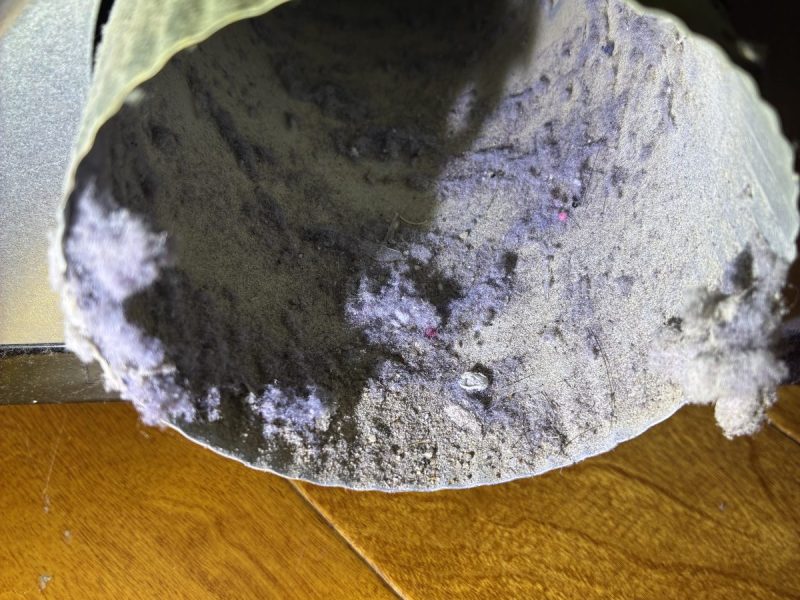
A lint screen catches a great deal of lint, but not all of it. Fine fibers pass into the exhaust path, where they can collect in the transition hose, rigid duct, elbows, exterior hood, or roof termination. As airflow narrows, the dryer works longer and heat remains in the system.
The calendar is only a starting point. A household running two loads a week has a different risk profile from a large family, salon, veterinary facility, laundromat, or 24-unit condominium association. The route matters too: a short, straight wall exit is easier to keep clear than a long run with several bends or a roof termination.
Why annual service is a useful baseline
The U.S. Fire Administration warns that failure to clean was the leading factor contributing to ignition in reported home clothes-dryer fires from 2018–2020. Its homeowner guidance recommends cleaning the lint filter before and after each cycle, cleaning behind the dryer, checking that the vent is not damaged or restricted, and confirming that the outdoor cover opens while the dryer runs.
A yearly check gives a technician a chance to remove accumulated lint and identify conditions that can make the next blockage happen faster. It is not a guarantee that every home can wait exactly 12 months. Usage and vent design can shorten the interval.
You may need dryer-vent cleaning more often when…
| Condition | Why it matters |
|---|---|
| Daily or high-volume laundry | More cycles send more lint and moisture through the exhaust |
| Long duct route or several elbows | Every bend adds resistance and another place for lint to settle |
| Roof termination | The full run and exterior hood are harder for a homeowner to inspect |
| Pets or lint-heavy fabrics | Hair, fibers, and lint can build up faster |
| Shared or stacked laundry | Restricted access and higher use can conceal a developing problem |
| A recently replaced dryer | A new appliance cannot overcome a clogged or damaged exhaust path |
Do not wait for the anniversary if warning signs appear
Schedule an inspection promptly if:
- Normal loads need more than one cycle.
- Clothes are unusually hot when the cycle ends.
- The dryer cabinet or laundry room becomes noticeably hotter.
- There is a hot, dusty, or burning odor.
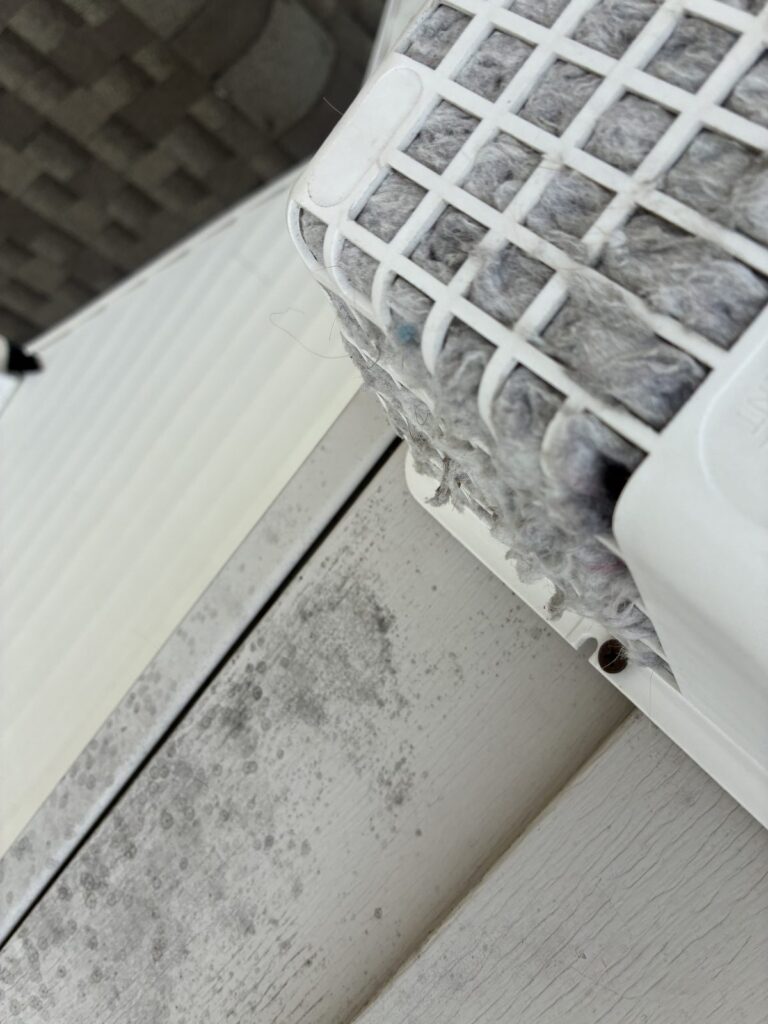
- Lint collects behind the machine or around the exterior hood.
- The outside flap barely moves while the dryer is running.
- The dryer displays an airflow or vent warning.
If you see smoke, sparks, or active flame, stop using the appliance, leave the area, and call 911. Do not treat an active fire condition as a cleaning appointment.
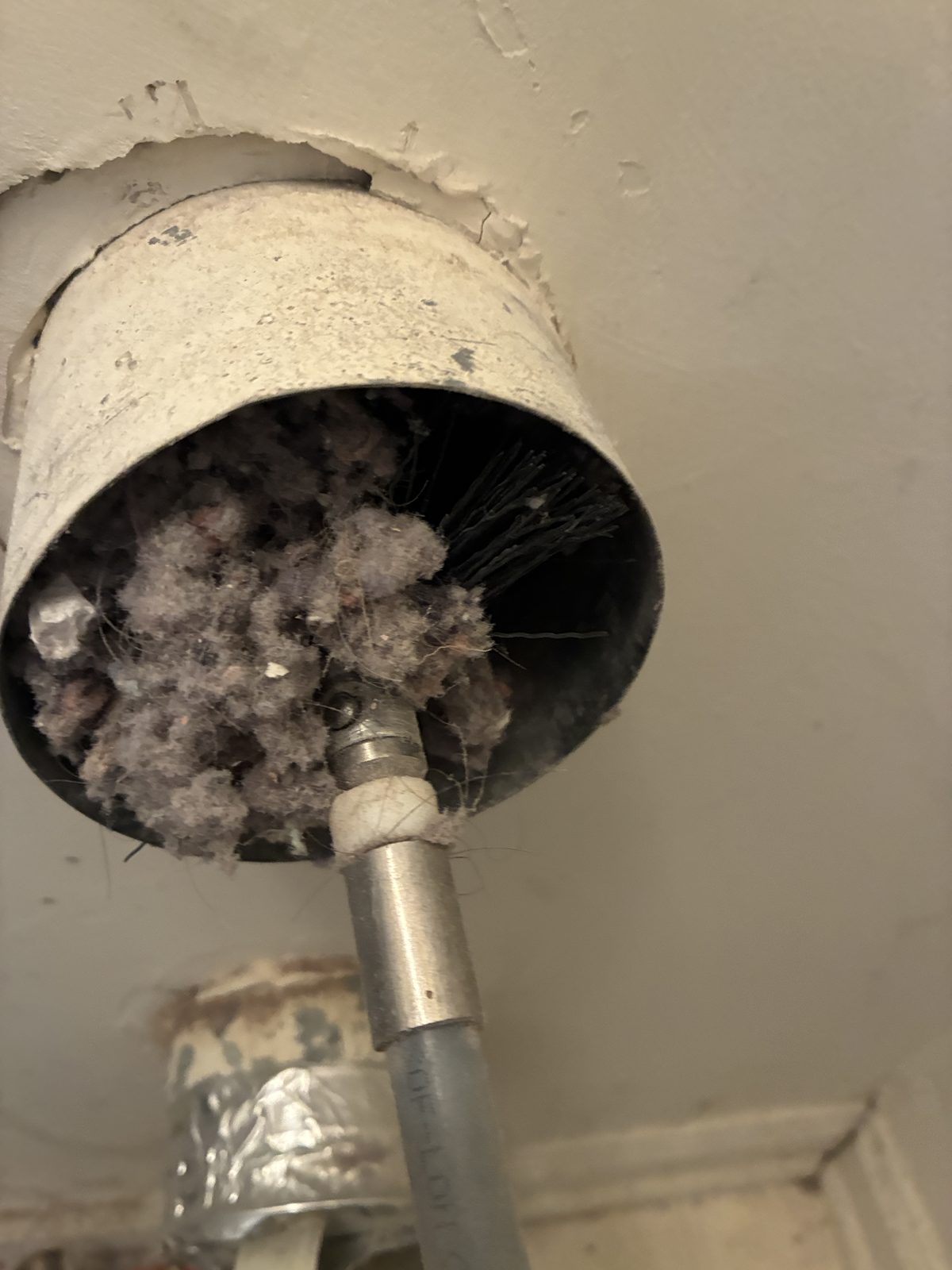
What professional dryer-vent service should include
A complete visit should address the exhaust path, not just the lint screen. Depending on access and system design, the scope may include:
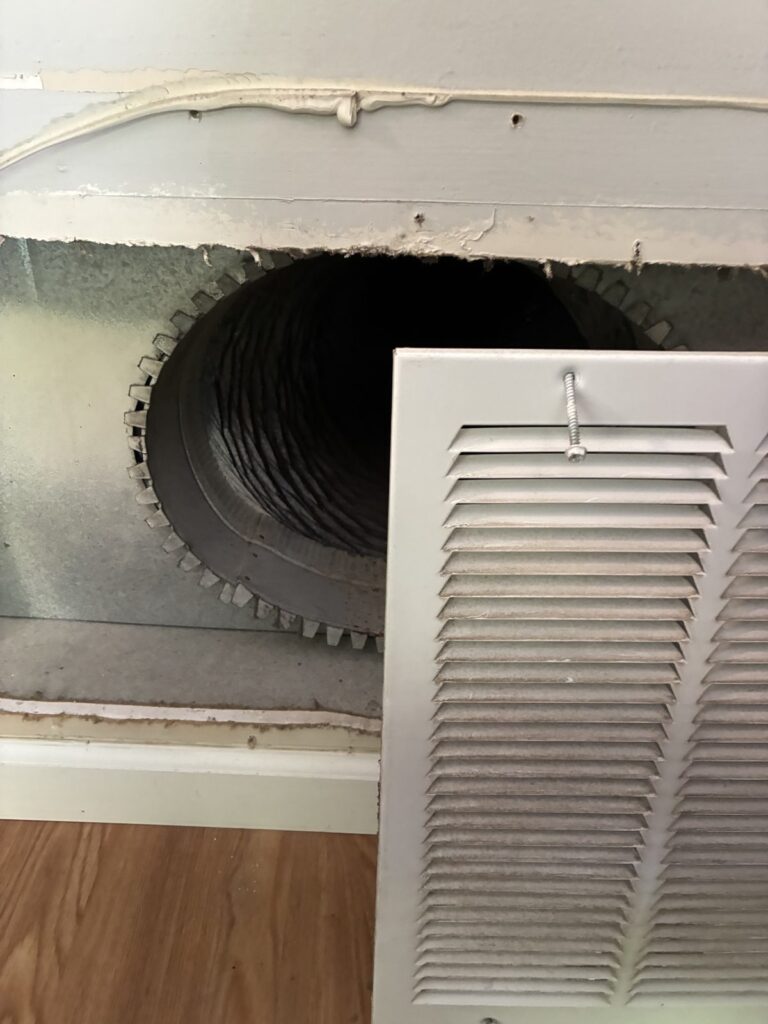
- Inspecting the connection behind the dryer for crushing, kinks, disconnection, or an unsuitable material.
- Cleaning the transition and main exhaust run with appropriate tools.
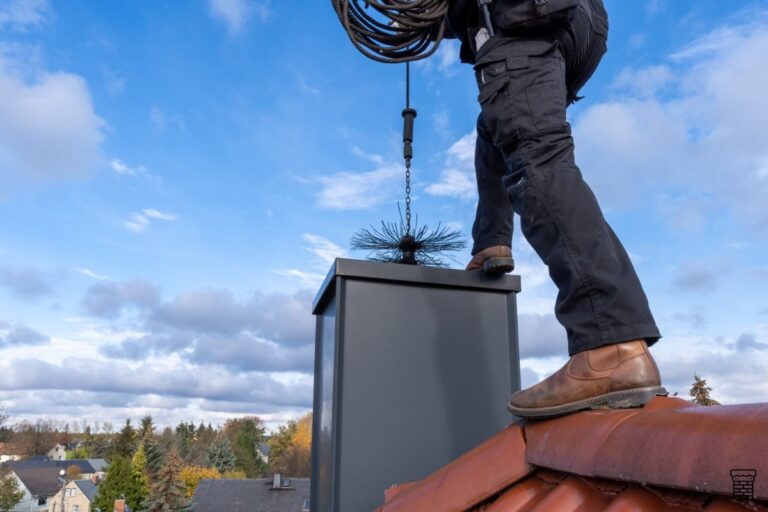
- Checking bends, concealed sections, and the exterior or roof termination.
- Confirming that the exterior damper opens and is not blocked by a nest, paint, landscaping, or debris.
- Reconnecting the dryer without compressing the transition duct.
- Testing operation and airflow after service when conditions allow.
Cleaning cannot repair a crushed duct, disconnected joint, damaged termination, or unsafe routing. Those conditions should be documented and handled as a separate repair or installation project. SPR can coordinate a qualified independent service professional for selected projects when needed.
Simple maintenance between professional cleanings
- Clean the lint screen every cycle. If fabric-softener residue coats the mesh, follow the dryer manufacturer’s cleaning instructions.
- Do not run the dryer without the lint filter.
- Keep the area behind and around the dryer clean. Lint and stored combustibles do not belong near heat-producing equipment.
- Look at the outside hood while the dryer runs. The damper should open freely and exhaust should be noticeable.
- Avoid overloading. Follow the appliance manufacturer’s capacity and cycle guidance.
- Do not ignore a suddenly slower dryer. The cause may be the vent, appliance, power supply, or gas system; diagnosis matters.
Can you clean a dryer vent yourself?
A homeowner can safely maintain the lint screen, vacuum the accessible area behind the dryer, and inspect a reachable exterior hood. A short, straight, fully accessible run may also be serviceable with the correct equipment and the appliance disconnected according to its manual.
Professional help is the safer choice when the termination is on the roof, the duct is long or concealed, the dryer is gas-fired, the transition is fragile, access requires moving stacked equipment, or the blockage cannot be cleared from one end. Pushing a brush into an unknown route can disconnect a joint or compact lint farther into the system.
Frequently asked questions
Does a new dryer need a clean vent?
Yes, if the existing exhaust path is restricted. Replacing the appliance does not remove lint from the wall or roof duct. Cleaning and inspecting the vent before or when installing a new dryer can protect the new machine’s airflow.
Is the lint screen enough?
No. The lint screen is essential but it does not capture every fiber. Lint can still accumulate downstream, especially in long runs, elbows, and exterior hoods.
Why does the vent clog again quickly?
Common contributors include high usage, excessive bends, a crushed transition, a damaged exterior hood, an unusually long route, poor joints, or a termination screen that traps lint. The cause should be documented rather than simply repeating the cleaning.
How long does dryer-vent cleaning take?
Time varies with access, length, bends, blockage severity, roof work, and whether the dryer must be moved. Ask for a scope based on the actual route instead of relying on a one-size-fits-all promise.
Call SPR Vent Cleaning at (732) 537-8588, review our dryer-vent cleaning service, or compare your symptoms with our seven warning signs guide. We serve homes, condos, and property managers across Central New Jersey.